Call
0113 436 0402

Request A Quote
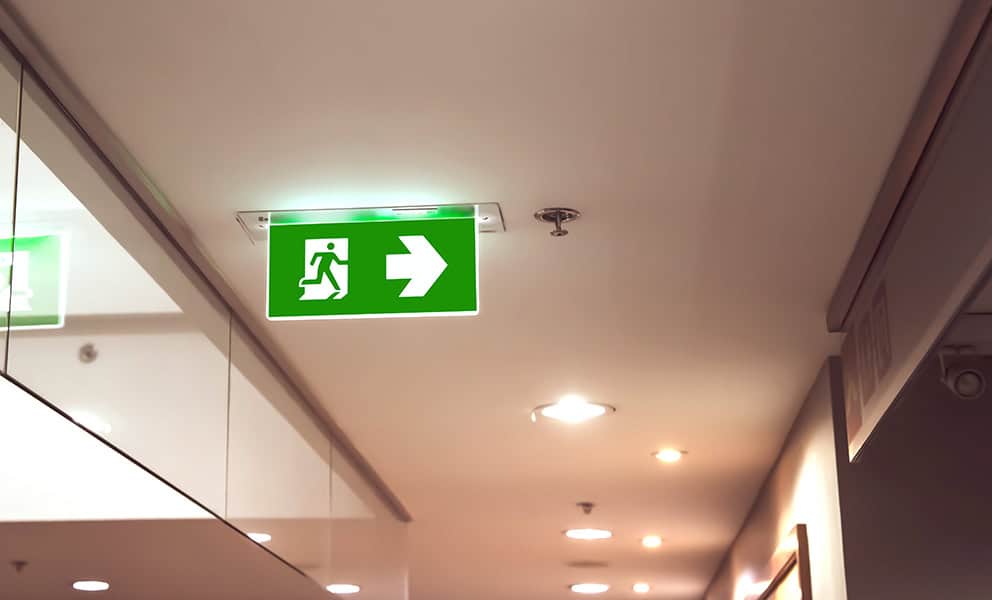
This guide explains what emergency lighting is, where it is required, how it should be maintained and what businesses need to know to remain compliant.
Emergency lighting is designed to operate automatically when the normal mains lighting fails. This could be due to a power cut, fire, equipment failure or local circuit fault.
Its purpose is to provide sufficient illumination to allow people to leave the building safely, identify hazards and access fire safety equipment. In some environments, it also supports safe shutdown of processes or continued operation for a limited period.
Emergency lighting typically includes illuminated exit signs, lighting along escape routes and lighting in specific high-risk areas. Systems may be self-contained, with individual battery backed fittings, or centrally supplied from a dedicated battery system.
In a commercial setting, loss of lighting can create immediate risks. People may be unfamiliar with the building layout, escape routes may become unclear and hazards such as steps, changes in floor level or machinery may be difficult to see.
Emergency lighting reduces these risks by providing consistent, predictable illumination during an incident. It supports orderly evacuation and helps staff, visitors and contractors move safely to a place of safety.
From a business perspective, effective emergency lighting also supports compliance with health and safety law, fire risk assessments and insurance requirements. Inadequate or poorly maintained systems can expose organisations to enforcement action and increased liability if an incident occurs.
Emergency lighting is generally required in most non-domestic premises where people are present. This includes offices, shops, warehouses, factories, schools, healthcare buildings and public sector sites.
Key areas where emergency lighting is typically required include escape routes, corridors, stairways and changes in direction. Exit doors and final exits must be clearly illuminated. Fire alarm call points, firefighting equipment and first aid points should also be visible under emergency conditions.
Large open areas, such as warehouses or production spaces, may require emergency lighting to prevent panic and allow safe movement. High risk task areas, where a sudden loss of light could create danger, often need additional provision.
The exact requirements depend on the building layout, occupancy, use and findings of the fire risk assessment. This assessment should identify where emergency lighting is necessary to manage risk effectively.
Related: Is Your Business Prepared for an Emergency?
There are several common types of emergency lighting used in commercial premises.
Systems can be maintained, meaning they remain on at reduced output during normal operation, or non-maintained, meaning they only illuminate when the power fails. The correct choice depends on the application and building use.
Emergency lighting requirements in the UK are linked to several areas of legislation and standards. While there is no single law that applies only to emergency lighting, the requirement is well established through health and safety and fire safety duties.
Employers and duty holders must ensure that premises are safe and that people can evacuate safely in an emergency. This includes providing suitable emergency lighting where needed.
Fire safety guidance and British Standards set out how systems should be designed, installed and maintained. These standards are commonly referenced during inspections, audits and enforcement activity.
Compliance is not about installing lighting once and forgetting about it. Ongoing testing, maintenance and record keeping are essential parts of meeting your responsibilities.
Emergency lighting systems must be tested regularly to ensure they will operate correctly when needed. Batteries degrade over time, fittings can fail and changes to the building can affect coverage.
Monthly functional testing is typically required. This involves a short duration test to confirm that fittings illuminate when the mains supply is interrupted. Any failures should be recorded and addressed promptly.
An annual full duration test is also required. This checks that the system can operate for its full rated duration, usually three hours. These tests should be planned to minimise disruption and ensure safety during the test period.
All testing should be recorded in a logbook. This documentation is often reviewed during fire risk assessments, audits or inspections and provides evidence that systems are being maintained properly.
From a day-to-day perspective, staff may notice emergency lights or exit signs that are not illuminated, damaged fittings or indicator lights showing faults. These observations should always be reported and investigated.
Testing, fault finding, battery replacement and repairs must only be carried out by a competent, qualified professional. Emergency lighting systems form part of the building’s life safety infrastructure and should not be interfered with by untrained personnel.
Professional contractors will assess system performance, confirm compliance with relevant standards and ensure any remedial work is completed safely and correctly.
In practice, many emergency lighting systems fall short due to lack of maintenance or changes to the building over time.
Common issues include failed batteries that no longer hold charge, fittings that do not illuminate during testing and poor coverage due to layout changes or racking installations.
In some cases, emergency lighting was adequate when first installed but no longer reflects how the space is used. New partitions, altered escape routes or changes in occupancy can all affect what is required.
Regular reviews and inspections help identify these issues before they become a serious risk.
The most effective approach to emergency lighting is proactive management. This starts with a suitable fire risk assessment that clearly identifies requirements.
Systems should be designed and installed by competent professionals, tested regularly and maintained in line with standards. Records should be kept up to date and easily accessible.
Any changes to the building, its use or occupancy should trigger a review of emergency lighting provision. What was suitable five years ago may no longer be adequate today.
Working with a specialist electrical compliance provider can simplify this process, reduce risk and provide confidence that systems are being managed correctly.
Emergency lighting plays a vital role in protecting people during power failures and emergency situations. For UK businesses, it is a core part of fire safety and electrical compliance.
By understanding where emergency lighting is required, ensuring systems are properly maintained and acting promptly on any issues, organisations can reduce risk and demonstrate clear compliance with their duties.
Volta Compliance supports businesses across Yorkshire, Lancashire and further afield with professional emergency lighting testing, inspection and maintenance. Our accredited engineers provide clear reporting and reliable service, backed by secure online access to all compliance documentation.
To discuss your emergency lighting requirements or arrange testing, contact Volta Compliance on 0113 436 0402 or email info@voltacompliance.com. We’re here to help you keep your premises safe, compliant and under control.
