A PAT testing certificate is the document that answers that question. Without it, demonstrating due diligence becomes very difficult. And the consequences of failing to do so can be severe.
This article explains what a PAT testing certificate is, what information it contains and what it actually proves in legal and practical terms. We’ll also discuss why keeping your certification up to date is an essential part of running a safe commercial premises.
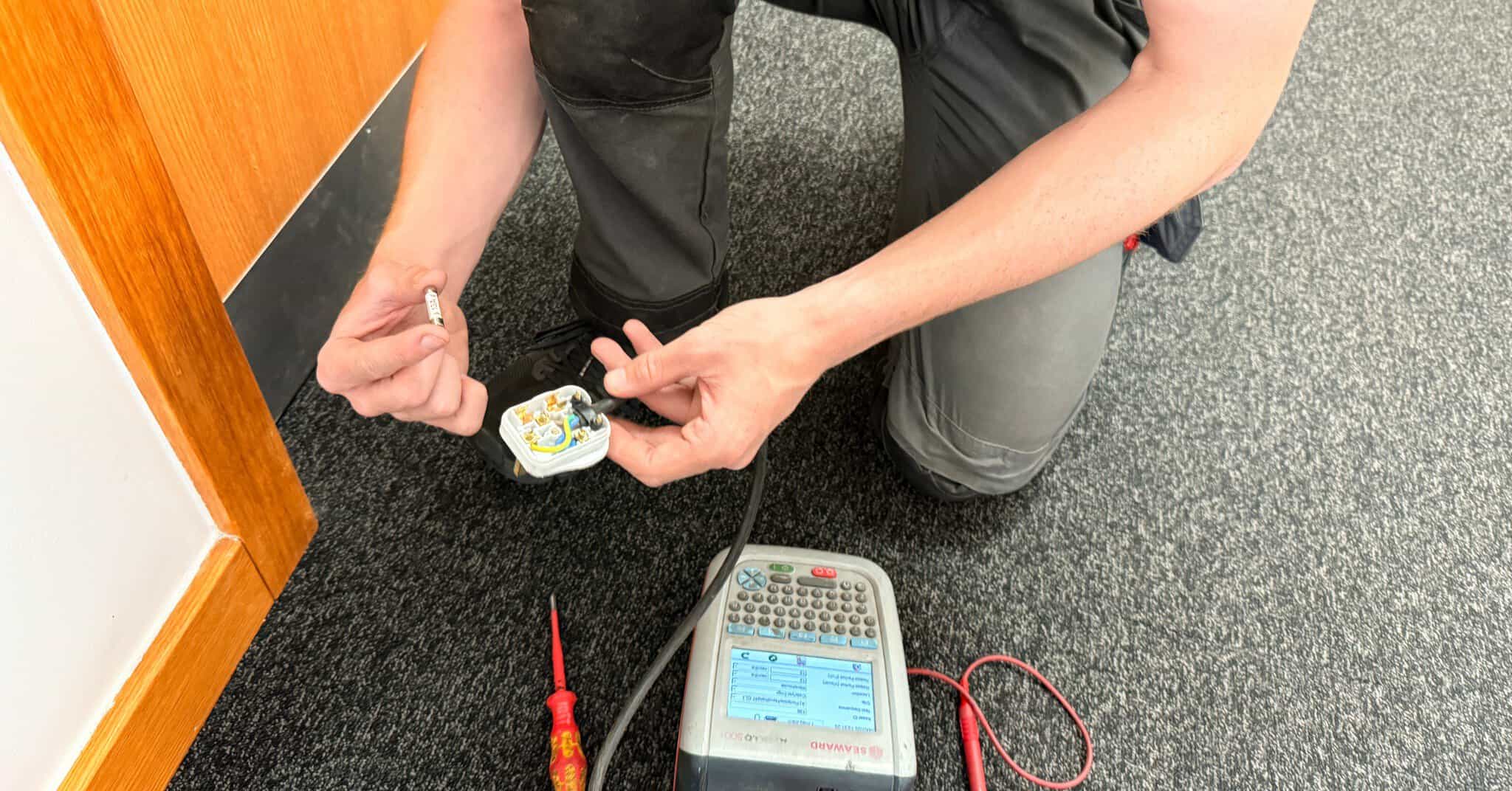
PAT stands for Portable Appliance Testing. It’s the process of inspecting and testing portable electrical equipment (anything that can be plugged into a socket and moved) to confirm that it’s safe to use. Testing involves a visual inspection of the appliance, its cable and plug, followed by a series of electrical tests carried out with specialist equipment.
The tests typically assess insulation resistance, earth continuity and lead polarity and leakage current (for certain appliance types). Each test checks a different aspect of the appliance's electrical safety. A trained operative works through the equipment systematically and records the outcome for each item.
A PAT testing certificate is the formal record produced once testing is complete. It summarises the results for all appliances tested during a visit and provides a documented audit trail for the premises.
A properly issued certificate should include:
The individual results may be presented as a full appliance register, either within the certificate itself or as an accompanying document. Together, these records show exactly which items were tested, when and by whom.
A PAT certificate proves that, at the time of testing, the appliances listed were inspected and tested by a competent person and found to be in a safe condition. It’s a point-in-time record, not a permanent guarantee.
This distinction matters. An appliance can pass its PAT test and then develop a fault a week later through damage or misuse. The certificate proves the appliance was safe when tested. It doesn’t certify it as permanently safe indefinitely. This is why regular retesting, combined with ongoing visual checks by staff, forms the basis of a sound appliance safety programme.
For legal purposes, a valid PAT certificate demonstrates that the duty holder has taken reasonable steps to maintain electrical safety in line with the Electricity at Work Regulations 1989. Employers have a legal obligation under those regulations to ensure that electrical systems and equipment are maintained in a safe condition. A current certificate is one of the clearest pieces of evidence that this obligation is being met.
Only a competent person can carry out PAT testing and issue a valid certificate. In practice, this means someone with the appropriate training, knowledge of the relevant standards and access to calibrated test equipment.
Many businesses use a qualified electrical contractor to carry out their PAT testing, which provides the strongest assurance that the testing has been carried out correctly and that the certificate will be accepted by insurers and enforcement bodies. Commercial PAT testing carried out by an accredited contractor gives you a certificate that stands up to scrutiny.
It’s worth noting that self-issued certificates (where a member of staff carries out testing without appropriate training or equipment) carry little weight in an enforcement or insurance context. If the quality of the testing is called into question, the certificate provides no meaningful protection.
There is no single fixed interval prescribed in law. The Health and Safety Executive (HSE) recommends that testing frequency be based on a risk assessment, taking into account the type of equipment, the environment in which it’s used and how often it’s handled.
As a general guide, equipment in a low-risk office environment may only need testing every two to four years, while equipment used in harsher conditions (construction sites, kitchens or industrial premises) should typically be tested annually or more frequently. For a more detailed breakdown, the article on how often electrical equipment should be PAT tested sets out the recommended intervals by environment and appliance type.
The certificate itself should indicate the next recommended test date. That recommendation should be treated as a minimum, not a target.
A PAT certificate is only useful if you can produce it when needed. So, during an insurance claim, a Health and Safety Executive inspection or a fire investigation. Storing paper certificates in a filing cabinet is adequate, but it creates obvious risks: documents can be lost, misfiled or destroyed.
Many businesses now manage their compliance documentation digitally, with certificates stored in a secure online portal alongside EICRs, emergency lighting records and fire alarm service reports. This makes it straightforward to demonstrate compliance across multiple sites without having to locate physical paperwork. A good electrical compliance management system keeps all certificates in one place and sends proactive reminders when renewal dates are approaching.
PAT testing covers portable appliances, but it’s only one component of a complete electrical safety programme. Fixed wiring must be assessed separately through an Electrical Installation Condition Report (EICR), which inspects the permanent electrical installation rather than individual pieces of equipment. Emergency lighting and fire alarm systems have their own testing and certification requirements.
Treating each of these as separate, isolated obligations is common. Treating them as an integrated programme (with renewal dates tracked, certificates stored centrally and a single contractor responsible for coordination) is considerably more efficient and less prone to gaps.
Volta Compliance provides PAT testing for commercial premises across Yorkshire, Lancashire and the wider UK, issuing full certification and maintaining records through our client compliance portal. To arrange testing or discuss your appliance safety requirements, contact our team on 0113 436 0402 or email info@voltacompliance.com.

