Call
0113 436 0402

Request A Quote
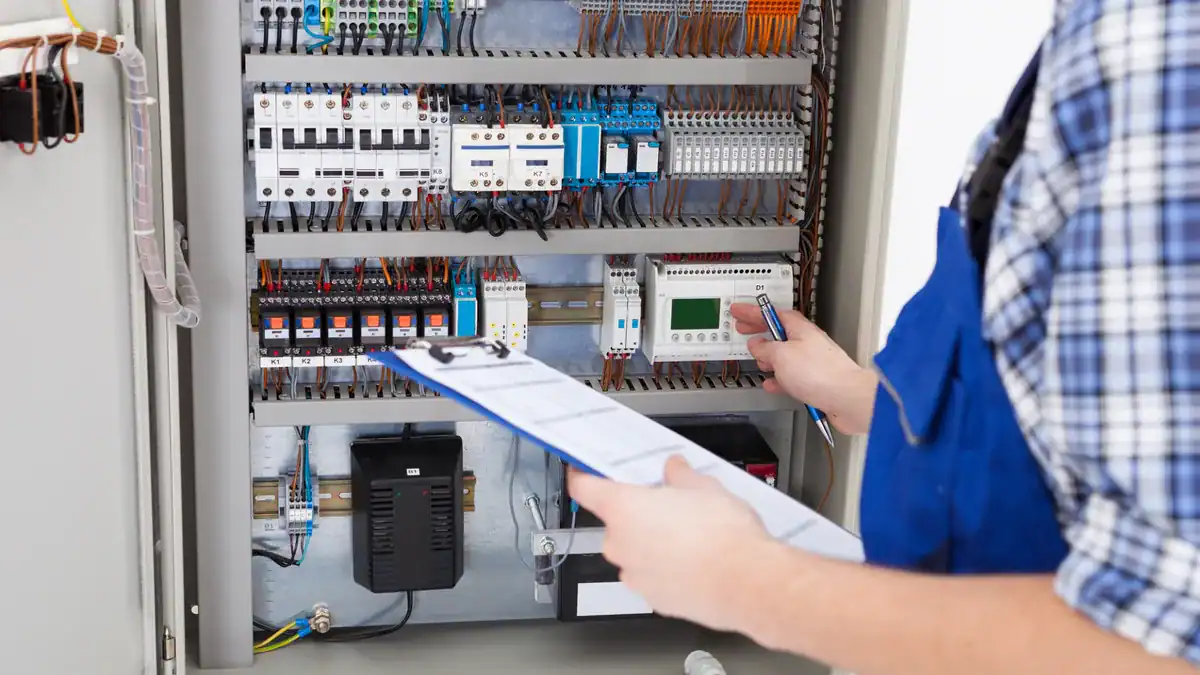
Without one, there's no formal record that new work meets the wiring regulations, which leaves facilities managers, landlords and insurers exposed if something later goes wrong.
Confusion between an EIC and other electrical paperwork (particularly the EICR) is common, and it matters. Ask a contractor for the wrong certificate, or accept a job without one, and a business can end up with electrical work that's effectively unverified.
This article explains what an Electrical Installation Certificate is, when it's needed and how it fits alongside the other certificates commercial premises rely on.
An Electrical Installation Certificate is a formal document confirming that new electrical work has been designed, installed, inspected and tested in accordance with BS 7671, the UK's national standard for electrical installations. It's issued once, on completion of the work, by the electrician or contractor responsible for carrying it out.
The certificate isn't a general statement that the electrics are fine. It's tied to a specific piece of work, and it sets out exactly what was done, who did it, and what test results were recorded. That level of detail matters if a dispute, insurance claim or future inspection ever needs to establish whether the original installation was compliant.
An EIC is required whenever new electrical installation work is carried out on a commercial or industrial property. Typical situations include:
If work falls short of this, a Minor Electrical Installation Works Certificate is usually the right paperwork instead. That might include a like-for-like socket replacement, for example. More on that distinction below.
The EIC and the EICR are the two certificates business owners most often mix up, but they cover different things entirely. An EICR is a periodic assessment of an existing installation's condition, carried out at set intervals to catch deterioration, damage or non-compliance that has developed over time.
An EIC, by contrast, is issued once, when new work is completed. It doesn't assess the rest of the building's wiring, only the work that has just been carried out. Put simply: an EICR asks whether an existing installation is still safe, while an EIC confirms that new work is safe and compliant right now. Understanding the legal requirements for EICRs alongside EIC obligations gives a fuller picture of a property's ongoing certification needs.
Not every job needs a full EIC. Where work is limited to an addition or alteration that doesn't involve installing a new circuit, a Minor Electrical Installation Works Certificate applies instead. It's a shorter document, but it still confirms the work meets BS 7671 and is signed by the person who carried it out.
Getting this distinction right matters for record-keeping. Filing the wrong certificate, or none at all, creates gaps that surface later, typically when a subsequent fixed wire testing inspection or EICR can't confirm what work was done, by whom or when.
A full EIC has three parts:
On smaller jobs, one qualified electrician typically signs off all three. On larger commercial projects like a full building rewire, these roles might be split between different competent people, each accountable for their part of the work.
The certificate also includes a schedule of test results: the measured values for insulation resistance, earth fault loop impedance, polarity and other checks carried out on each circuit. These figures are what turn the certificate from a signature into evidence. It’s proof that the installation was actually tested, not just assumed to be safe.
An EIC should only be issued by a qualified, competent electrician, typically someone holding recognised inspection and testing qualifications and working for a business registered with a scheme such as NICEIC. In commercial and industrial premises, this is what the Electricity at Work Regulations 1989 require of anyone responsible for electrical safety at work.
Before commissioning new electrical work, it's worth confirming the contractor's accreditation and asking specifically for an EIC on completion, not just an invoice or a verbal assurance that it's all been tested. If access to accredited contractors is the sticking point, finding a reputable commercial electrical contractor should be the first step, before any work begins.
For facilities managers and business owners, an EIC is more than a compliance formality. It's the evidence a business needs if:
It also feeds directly into future compliance. A well-documented EIC gives the engineer carrying out the next EICR a clear baseline to test against, rather than an unknown installation history. Businesses planning a commercial rewire or a significant refurbishment should treat the EIC as a non-negotiable part of the project. Put simply, it’s not an optional extra requested after the fact.
Volta Compliance carries out and certifies new electrical installation work for commercial and industrial premises, from EV charger circuits to full rewires, alongside ongoing EICR and fixed wire testing. Working across Yorkshire, Lancashire and the wider UK, the team makes sure every job is signed off with the correct certification from day one. To discuss a new installation, alteration or rewire, contact our team on 0113 436 0402 or email info@voltacompliance.com.
