Call
0113 436 0402

Request A Quote
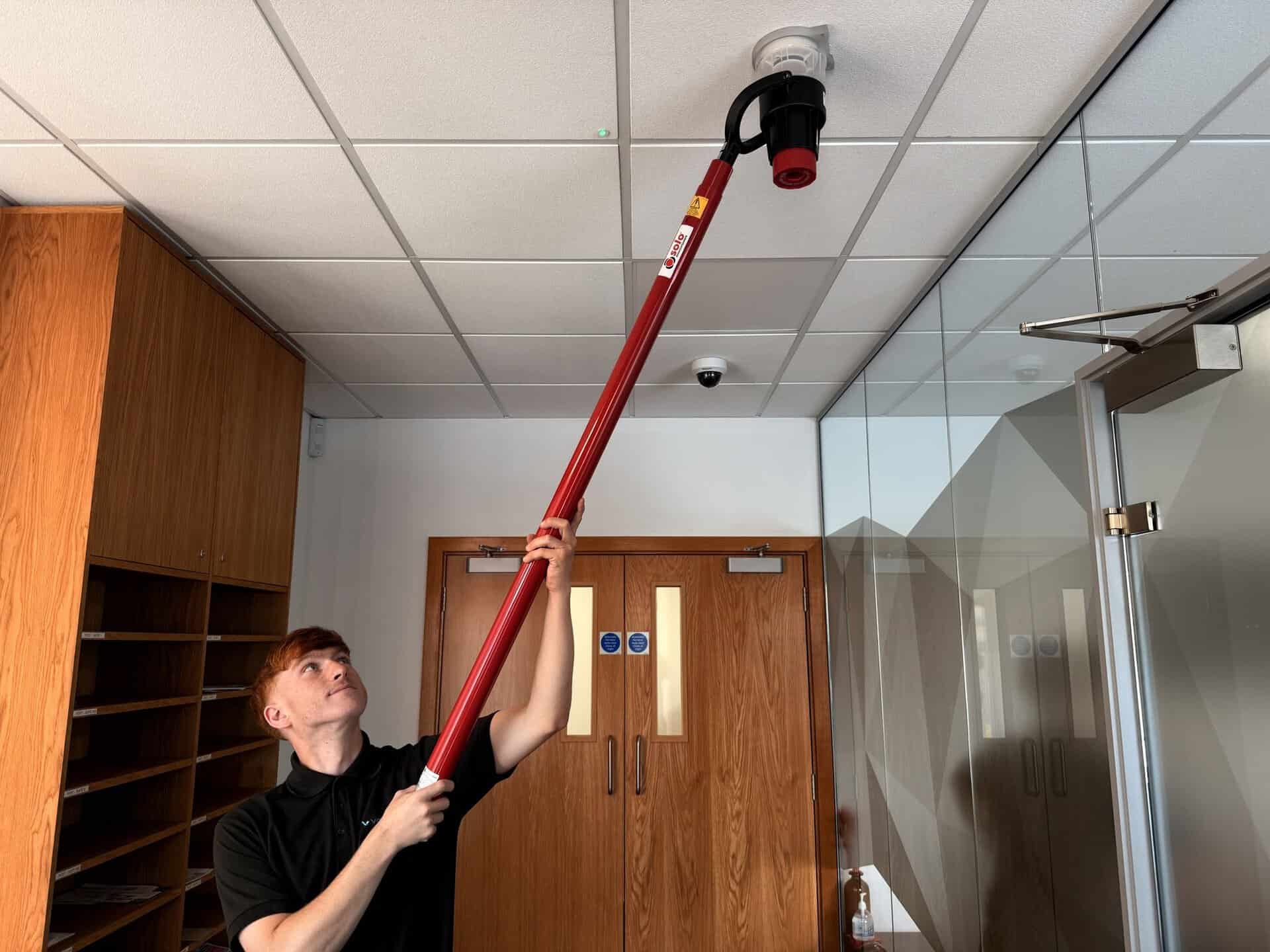
UK fire alarm testing regulations require that systems are tested regularly, maintained properly and documented throughout. For the responsible person at any commercial premises, understanding what the law demands (and how often) is essential.
This article covers the key legislation, testing intervals, record-keeping obligations and what happens when things go wrong.
The primary legislation governing fire alarm systems in commercial premises is the Regulatory Reform (Fire Safety) Order 2005 (RRFSO). It places a duty on the "responsible person" to ensure that fire detection and warning systems are appropriate for the premises, maintained in working order and tested at regular intervals.
The RRFSO doesn't prescribe exact testing schedules itself. Instead, it requires compliance with recognised British Standards, which set out the specifics. For commercial premises, the relevant standard is BS 5839-1:2017. This is the benchmark against which fire alarm systems in non-domestic buildings are assessed.
The RRFSO defines the responsible person as whoever has control of the premises. In most commercial settings, this is the employer or building owner. In multi-occupancy buildings, it might be a managing agent or facilities manager.
The responsible person doesn't have to carry out testing themselves, but they must ensure it happens correctly and on schedule. If they delegate weekly testing to a member of staff, that person needs to be competent. In short, they need to understand how the system works and know what to do if a fault is identified. For periodic inspections and servicing, a qualified contractor must be used.
BS 5839-1:2017 sets out a tiered testing schedule. Each level serves a different purpose.
The RRFSO requires businesses to maintain written records of fire safety activities. While a fire log book isn't named explicitly in the legislation, it is the standard and expected method of meeting this requirement. In practice, the absence of records is treated as evidence of non-compliance.
The log should record every weekly test, including:
Any faults identified must be noted, along with the action taken and when it was resolved. Six-monthly service visits should also be logged, along with any engineer's reports or certificates.
Records must be kept on the premises and made available to enforcing authorities on request. Insurers may also request sight of the log book as part of their assessment of your fire safety arrangements.
The RRFSO requires premises to have "appropriate" fire detection. But it doesn't define this in prescriptive terms. What's appropriate depends on the size and layout of the premises, the number of occupants and the activities taking place.
For most commercial buildings, a Category L or Category M system as defined under BS 5839-1:2017 will be required. A fire risk assessment should identify what type of system is needed. This assessment must be carried out by a competent person and reviewed regularly, particularly after any significant change to the premises or its occupancy.
If your premises currently rely on a simpler detection method, such as standalone smoke detectors, it's worth confirming whether this meets the standard for your building type. A qualified fire alarm specialist can advise.
Failing to maintain or test a fire alarm system is not a minor oversight. Under the RRFSO, enforcing authorities (typically the local fire and rescue service) have powers to issue enforcement notices, prohibition notices and prosecution. Fines can be significant, and in serious cases, individuals face the risk of a custodial sentence.
Beyond legal penalties, inadequate records can invalidate insurance cover. If a fire occurs and the insurer finds no evidence of regular testing, a claim may be refused. The financial and reputational consequences of that outcome are severe.
It's also worth noting that the fire and rescue service can inspect premises at any time. Demonstrating a clear, consistent record of compliance (not just a working alarm) is what protects a business in those circumstances.
Fire alarm testing doesn't sit in isolation. For most commercial premises, it forms part of a broader fire alarm servicing programme that includes system maintenance and response to faults. It also connects to other compliance obligations. Notably emergency lighting testing, which ensures escape routes remain visible when the power fails.
Facilities managers responsible for multiple sites benefit from centralised oversight of all testing intervals and certification. Without a reliable system for tracking renewal dates and contractor visits, it's easy for a service to fall overdue, particularly across a large or complex estate.
Volta Compliance supports businesses across Yorkshire, Lancashire and the wider UK with fire alarm servicing and wider electrical compliance management. Whether you need a one-off service visit or a structured programme of planned maintenance across multiple sites, our team can help. To discuss your requirements, contact us on 0113 436 0402 or email info@voltacompliance.com.
