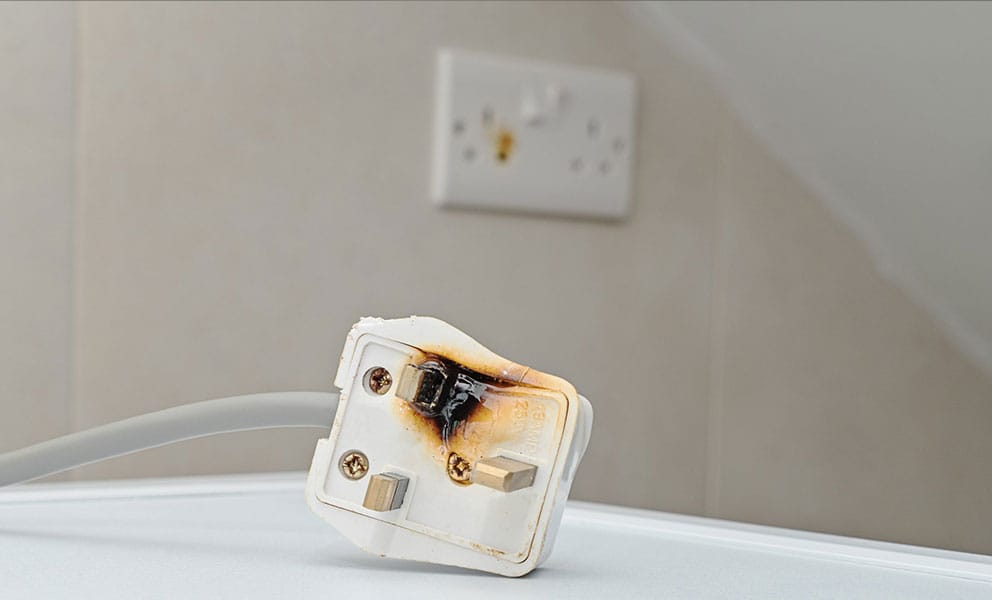
But how do you know if an electrical appliance is faulty? Read on to find out…
First things first, it’s worth clarifying what’s covered by the term ‘electrical appliance’. Quite simply, it’s anything that’s connected to your electrical mains. That can be a hard-wired appliance, also known as a fixed appliance, or a portable appliance which is plugged in.
Some examples of fixed appliances included hand dryers, storage heaters and even light fixtures and switches. Portable appliances can be anything from fridges, printers and computers to kettles, phone chargers and even extension leads.
What’s important here is that – fixed or portable, big or small – all of these examples are connected to your electrical circuit. As such, any electrical appliance faults can still cause serious damage to your staff, your premises and your electrical installation.
It’s important to remember the less obvious items. Extension leads hidden under desks, old printers left in storage or kitchen appliances used only occasionally can still present a hazard. Many businesses underestimate the risks posed by these “out of sight, out of mind” appliances. Even something as small as a faulty phone charger or underused kettle could spark a fire if left unchecked.
Let’s be clear – nobody should go looking for electrical appliance faults without the right training. The following are things you may notice day-to-day that indicate a fault with one of your appliances…
It’s not unheard of to get a small shock when switching on an appliance. But that doesn’t mean it’s something to ignore. Even the smallest shock indicates a fault with the appliance and/or your electrical installation, so you should contact a professional immediately.
But it’s not just shocks that act as warning signs. Others include tingling sensations when touching the casing, buzzing or humming noises from inside the unit or appliances that feel unusually hot to the touch. Staff should be encouraged to report these symptoms immediately, rather than assuming they are harmless quirks.
Circuit breakers are installed as standard to interrupt the flow of electricity when a fault is detected, such as an overload or short circuit. In many cases, these are caused by faulty electrical appliances. If your power goes out, don’t just reset the system.
Frequent breaker trips are one of the clearest signs that something isn’t right. While it may be tempting to simply reset and carry on, repeated tripping can point to a serious fault with one or more appliances. Left unresolved, this could lead to damage in the wider electrical system – or worse, an electrical fire.
From flickering lights to random outages, functional problems with your appliances can also indicate an electrical fault. Again, rather than simply turning them on and off, or putting up with the issues, it’s definitely worth getting your appliances checked.
Finally, there’s age. Older appliances are naturally more likely to develop faults. That’s especially true when they haven’t been checked for their lifespan. The problem? This isn’t a sign you can look out for unless appliances are regularly tested, which bring us to…
Portable appliance testing (PAT) is a quick and easy way to identify faulty electrical appliances before they cause serious problems for your business. Rather than waiting for the issues above, all appliances you use will be tested and approved for their safety until the next test is required.
The recommended frequency varies based on the type of appliances, rate of use and their surrounding environment. A competent professional will take all of these factors into account when advising on the next test date.
A PAT test usually involves two stages. First, a visual inspection to check for damage, wear and tear, or obvious issues such as frayed wires or cracked casings. Second, a series of electrical tests are carried out using specialist equipment to confirm the appliance is safe to use. Appliances that pass are labelled with a sticker showing the test date, result and the next recommended test date.
This process is quick and minimally disruptive, giving businesses peace of mind that their equipment is safe. It also provides a paper trail of compliance that can be very useful if you face a health and safety inspection, an insurance claim, or an external audit.
Many businesses assume that if an appliance “still works”, it’s fine to keep using it. Unfortunately, that’s not the case. Ignoring the signs of a faulty electrical appliance can lead to serious consequences:
In short, dealing with issues early is always cheaper and safer than waiting for them to escalate.
Spotting faults and carrying out regular testing will help, but the most effective businesses adopt a proactive culture of electrical safety. Here are some simple steps:
By embedding these practices into day-to-day operations, businesses can significantly reduce the risk of accidents, damage and costly downtime.
Faulty electrical appliances aren’t just an inconvenience – they’re a genuine risk to your business, your employees and your premises. From fire hazards to costly downtime, even a small oversight can have significant consequences. The good news is that these risks are preventable with the right approach.
That’s where professional testing comes in. At Volta Compliance, we take the hassle out of electrical safety by providing reliable, efficient PAT testing services tailored to your business. Whether you run a busy office, a manufacturing site or a multi-site organisation, we’ll make sure your appliances are inspected, tested and documented in line with the latest standards.
Don’t wait until a fault develops into a bigger problem. Stay one step ahead with professional PAT testing from Volta Compliance. To arrange a no-obligation quote, call us today on 0113 436 0402 or email info@voltacompliance.com.

