Many businesses are unsure how often fire alarms should be serviced, what checks are required, and where responsibility sits. Understanding these requirements is essential for compliance, insurance and, most importantly, safety.
Fire alarm servicing refers to the routine inspection, testing and maintenance of a fire detection and alarm system by a competent professional. The purpose is to confirm that the system is working as designed and will operate correctly in the event of a fire.
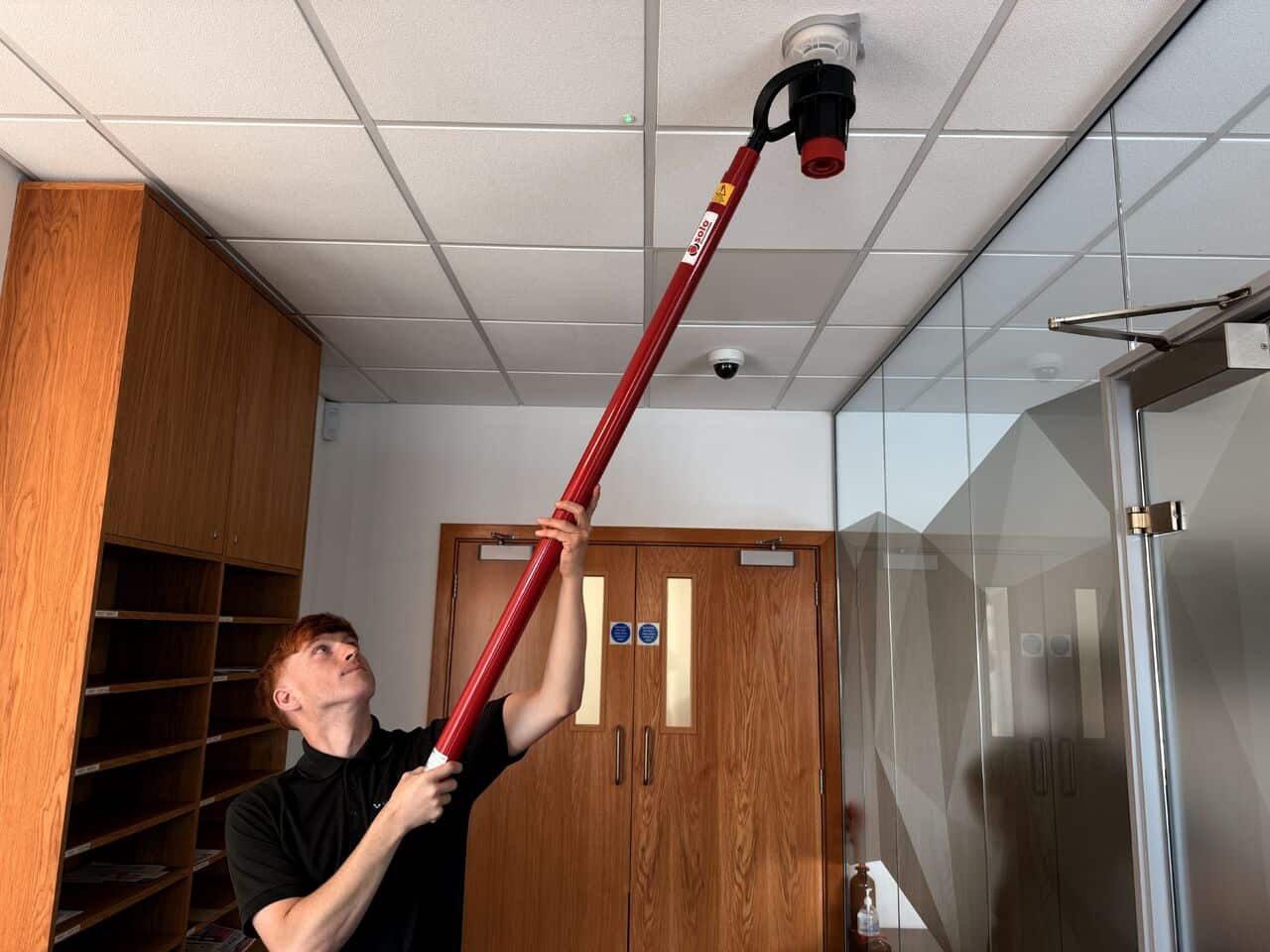
A typical service includes checking control panels, detectors, manual call points, sounders and power supplies. Any faults, damage or signs of deterioration are identified and recorded so they can be addressed before they become a risk.
Servicing is separate from day to day user checks. While staff may carry out simple visual checks or weekly tests, a full service must be completed by a qualified fire alarm engineer.
For most non domestic buildings in the UK, fire alarms should be professionally serviced at least every six months. This guidance comes from BS 5839, which sets out best practice for fire detection and alarm systems.
In higher risk environments, more frequent servicing may be recommended. This can include buildings with sleeping occupants, complex systems, harsh operating conditions or a history of faults. In some cases, quarterly servicing may be appropriate.
The six monthly service is the minimum expectation for the majority of commercial, industrial, education and public sector buildings. Leaving longer gaps between services increases the risk of faults going unnoticed.
In addition to professional servicing, BS 5839 recommends regular checks carried out by the responsible person on site. These are simple tests that help confirm the system is functioning between services.
A weekly test usually involves activating a different manual call point each week to confirm the alarm sounds and the control panel responds correctly. The results should be recorded in a fire log book.
Staff may also notice visible issues during normal use, such as damaged call points, blocked detectors or fault warnings on the panel. These observations should always be reported promptly, but they do not replace professional servicing.
It is important that staff are never instructed to open panels, remove detectors or attempt repairs.
Fire alarm systems are often out of sight and out of mind. Unlike lighting or heating, they may not be used for long periods. This makes regular servicing essential.
Over time, detectors can become contaminated with dust or debris, batteries can degrade, and components can fail without obvious warning. Environmental factors such as vibration, temperature changes or building works can also affect performance.
Regular servicing ensures faults are identified early, reducing the risk of system failure during an emergency. It also helps prevent false alarms, which can disrupt operations and lead to complacency if they occur frequently.
From a business perspective, routine servicing supports compliance, protects occupants and reduces the likelihood of costly incidents or enforcement action.
Under fire safety law, the responsible person must ensure that fire safety equipment is maintained in an efficient working order. This includes fire detection and alarm systems.
While the legislation does not specify exact servicing intervals, following recognised standards such as BS 5839 is widely accepted as evidence of compliance. Failing to maintain systems properly could be difficult to defend if an incident occurs.
Insurers also expect fire alarms to be serviced in line with standards. Poor maintenance can lead to claims being challenged or rejected following a fire.
In simple terms, regular servicing is not optional. It is part of a business’s duty of care.
A professional fire alarm service is structured and methodical. The engineer will inspect the control panel for faults, damage or signs of interference and confirm that indicators and controls operate correctly.
Detectors and call points are checked on a rotating basis so that all devices are tested over time. Sounders and visual alarms are confirmed to operate as intended, and power supplies are inspected to ensure reliability during a mains failure.
Any defects are recorded clearly, along with recommendations for remedial work if needed. This documentation forms part of your compliance records and should be retained.
If faults are found, they should be addressed promptly by a competent professional. Temporary measures are not a substitute for proper repair.
Many faults uncovered during servicing are not obvious during daily use. Common examples include detectors that have become overly sensitive or unresponsive, degraded batteries, damaged cabling or devices that have been obstructed during refurbishment works.
Control panels may also show intermittent faults that are only visible during inspection. Left unchecked, these issues can compromise system performance when it matters most.
Regular servicing reduces the likelihood of serious failures and helps ensure the system continues to meet the needs of the building as it changes over time.
Fire alarm servicing should be considered alongside other safety and compliance activities. This includes emergency lighting testing, fire risk assessments and electrical inspections.
A coordinated approach helps businesses avoid gaps in compliance and ensures systems work together as intended during an emergency. For example, a fire alarm activation may trigger emergency lighting or door releases, all of which rely on proper maintenance.
Keeping clear, up to date records across all areas of compliance also makes audits, inspections and insurance reviews more straightforward.
The most effective approach is to place fire alarm servicing on a planned schedule, rather than reacting to faults as they arise. Working with a competent provider ensures services are completed on time and in line with standards.
Businesses should also ensure staff know how to report faults and understand the importance of routine checks. Clear responsibility for fire safety should be assigned, with records kept in a central location.
Where systems are extended, altered or affected by building works, additional checks may be required to confirm continued compliance.
Taking fire alarm maintenance seriously is a practical step that reduces risk and demonstrates responsible management.
Fire alarms play a vital role in protecting people and property, but only if they are properly maintained. For most businesses, professional servicing every six months is the expected standard, supported by regular on site checks and clear record keeping.
Staying on top of servicing reduces risk, supports compliance and provides confidence that your systems will perform when needed.
Volta Compliance supports businesses across Yorkshire, Lancashire and the wider UK with fire alarm servicing, emergency lighting testing and full electrical compliance. To discuss your fire alarm maintenance requirements or to arrange a service visit, contact our team on 0113 436 0402 or email info@voltacompliance.com.

