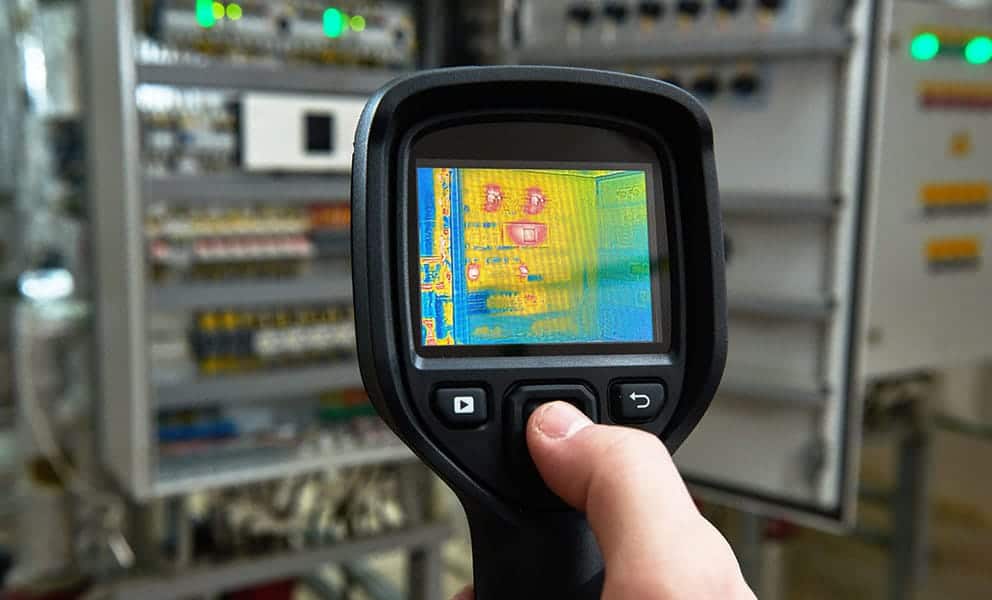
So, should you attempt thermal imaging as DIY? In this post, we’ll compare professional and DIY thermal imaging to help you decide which is best for you.
Thermal imaging is a method that turns heat into visible light to study objects or areas. It uses special cameras that sense infrared radiation – the energy that objects give off as they get hotter.
These cameras detect this energy and convert it into an electronic signal. The signal is then transformed into a visual image that shows the variations in temperature – making it easy to identify areas of heat and cold.
Thermal images typically display temperature differences as colour gradients. Warmer areas may appear brighter, while cooler areas show as darker shades. This contrast helps highlight potential issues such as loose connections or overloaded components. What matters most is not the colours themselves but the temperature pattern. Professionals are trained to recognise when a heat signature is outside the expected range and when it could indicate a developing fault.
As thermal imaging is used to see heat, it can help in maintenance, safety checks and troubleshooting. For example, it spots heat loss in buildings and machinery issues in factories. One of the most common uses is as a non-invasive way to identify issues within your electrical installation.
In electrical systems, thermal imaging is often used to identify high resistance points, imbalanced loads or deteriorating components before they cause downtime. These issues rarely present visible symptoms during day-to-day operation. In many cases, equipment continues to run even as heat builds internally. A brief thermal scan can uncover these hidden issues, helping facilities managers address them early and avoid unexpected failures.
DIY thermal imaging is obviously cheaper than hiring a professional. You’ll pay the cost of the equipment you need, which will typically be between £150 to £1,000 depending on quality. Then all that’s left is the cost of your own time, whenever you can fit it in. You’ll also bypass the need to book in with a professional, which may be something you tend to put off.
Although budget-friendly, DIY thermal cameras can have quality issues and the data they provide might not be as reliable compared to professional equipment. Additionally, interpreting thermal images can be a challenge without proper training, leading to the potential to misread the data. Remember, you’ll need to call in a professional to make repairs for any issues you find too.
Another limitation of DIY equipment is its narrower temperature range and lower resolution. Many entry-level devices struggle to detect smaller temperature differences, meaning subtle but important faults may go unnoticed. Reflections from shiny surfaces can also distort the image, which is something an untrained user may not recognise.
There is also the matter of safety. While a DIY thermal camera allows you to observe equipment from a distance, interpreting what you see can influence decisions about whether equipment should be switched off or inspected further. These decisions should only be made by a qualified electrician, as they understand the risks associated with live electrical systems.
Finally, from a compliance perspective, thermal images taken without proper methodology or documentation may not satisfy insurers, auditors or safety assessors. Poor quality images or incomplete reports could leave a business without the evidence needed to demonstrate proactive maintenance.
Hiring professionals for thermal imaging brings many benefits, including:
Professionals also follow consistent testing protocols. This includes carrying out scans under the correct electrical load conditions, capturing comparative images and recording results in a structured format. The result is a clear report that highlights any anomalies, explains their likely cause and recommends the next steps. This structured approach is essential for businesses that rely on documented evidence when demonstrating compliance.
Another benefit is trend analysis. When thermal imaging is carried out as part of an ongoing maintenance programme, engineers can compare current scans with previous results. Subtle changes in temperature over time can indicate components that are slowly deteriorating. This level of insight is extremely difficult to achieve with occasional DIY checks.
There are also some potential downsides to hiring a professional for thermal imaging:
From a practical point of view, the key question is not cost but reliability. Thermal imaging is most effective when combined with professional judgement. A trained engineer can distinguish between normal temperature variations and issues that require further investigation. This reduces unnecessary disruption while ensuring that genuine faults are identified promptly.
Businesses that already have regular inspections such as EICRs, emergency lighting testing or maintenance programmes often find that adding thermal imaging provides a clearer picture of the overall health of their installation. This can support long term planning and help avoid unplanned outages.
If you’re looking for a professional team to carry out thermal imaging checks on your electrical systems, look no further.
Volta Compliance's team has over 20 years of experience in commercial and industrial electrical work. We provide professional electrical thermal imaging as a standalone, non-invasive check for your site, or as part of a full inspection.
Thermal imaging is most effective when it forms part of a planned approach to electrical safety. Regular assessments provide clear visibility of developing issues and help businesses make informed decisions about maintenance and risk management. Working with an experienced contractor ensures that every inspection is carried out with the same level of accuracy, consistency and attention to detail.
For expert advice, more information on our services or a free no-obligation quote, get in touch with our friendly team today on 0113 436 0402.

